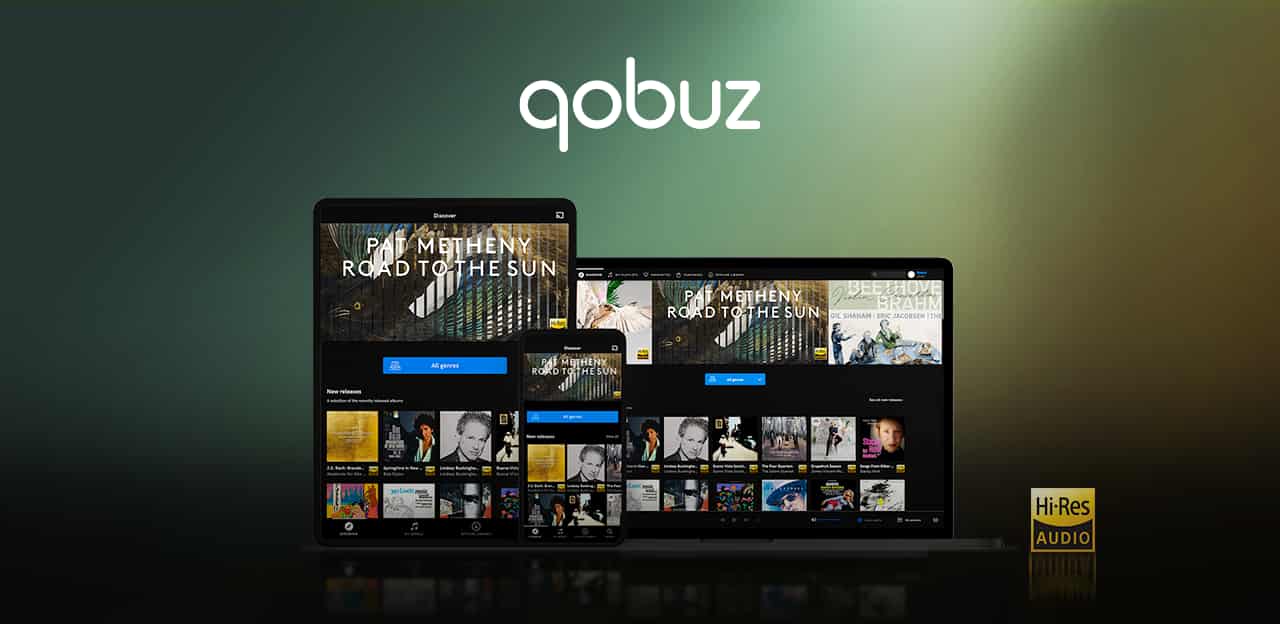
In an era dominated by streaming platforms that prioritize convenience, algorithms, and massive catalogs, Qobuz stands apart with a singular mission: to deliver music in the highest possible quality while honoring artists, albums, and listeners who truly care about sound. Founded in France and shaped by European musical culture, Qobuz has carved out a unique space in the global streaming market by focusing on lossless audio, high-resolution downloads, and editorial depth rather than mass appeal.
While services like Spotify, Apple Music, and Amazon Music dominate headlines and subscriber counts, Qobuz has quietly built a loyal following among audiophiles, musicians, producers, and discerning listeners who believe that how music sounds matters just as much as what music is played.
Origins: A French Vision for High-Fidelity Music
Qobuz was founded in 2007 in Paris by Georges Fornay and Alexandre Leforestier. At a time when MP3 downloads and compressed audio ruled the digital music landscape, Qobuz took a radically different approach. Its founders believed that digital music did not need to sacrifice quality for accessibility, and that listeners deserved sound that was as close as possible to the original studio master.
The company initially launched as a music discovery and download platform, later evolving into a streaming service. In 2013, Qobuz made history by becoming the world’s first streaming platform to offer lossless CD-quality audio (FLAC 16-bit/44.1 kHz), years before competitors followed suit. This move firmly established Qobuz as a pioneer in high-fidelity digital music.
Despite financial challenges and near bankruptcy in its early years, Qobuz survived thanks to private investment and a devoted user base. Over time, it expanded beyond France into other European markets, the United States, and parts of Latin America, while maintaining its core philosophy: sound quality without compromise.
Sound Quality First: What Sets Qobuz Apart
The defining feature of Qobuz is its commitment to audio quality. Unlike many mainstream streaming platforms that rely on compressed formats such as MP3 or Ogg Vorbis, Qobuz streams music in FLAC, a lossless format that preserves every detail of the original recording.
Qobuz offers several levels of quality:
- CD Quality Streaming: 16-bit / 44.1 kHz FLAC, equivalent to a physical CD.
- High-Resolution Streaming (Hi-Res): Up to 24-bit / 192 kHz, offering studio-level fidelity.
- Hi-Res Downloads: Users can purchase and own high-resolution files, a rarity in today’s streaming-first ecosystem.
For audiophiles with high-end headphones, DACs, amplifiers, and speakers, the difference is immediately noticeable. Greater dynamic range, clearer instrument separation, more natural vocals, and improved spatial depth all contribute to a more immersive listening experience.
Importantly, Qobuz does not use proprietary codecs or gimmicky “spatial” enhancements. Its philosophy is rooted in authenticity: delivering the music exactly as it was mastered.
Streaming and Downloads: A Hybrid Model
One of Qobuz’s most distinctive features is its hybrid approach to music consumption. While most streaming services focus exclusively on access, Qobuz also emphasizes ownership.
Subscribers can stream music freely within the platform, but they also have the option to purchase albums and tracks as downloads in CD or Hi-Res quality. These files are DRM-free, meaning users can store them locally, transfer them between devices, and play them on any compatible hardware without restrictions.
This model appeals to listeners who value permanence and control, particularly collectors who want to support artists directly while building a digital music library that will not disappear if a subscription ends.
Editorial Curation Over Algorithms
Where many streaming services rely heavily on algorithmic playlists and personalized recommendations driven by user data, Qobuz takes a more editorial and human-centered approach.
The platform features:
- In-depth album reviews
- Artist interviews
- Genre guides
- Liner-note style essays
- Curated playlists by music journalists and experts
This editorial content gives Qobuz the feel of a digital music magazine rather than a purely utilitarian streaming app. It encourages active listening, exploration of full albums, and discovery across genres such as classical, jazz, electronic, rock, and world music.
While Qobuz does offer recommendations, they are less aggressive and less repetitive than those on larger platforms. The focus remains on music as art, not background noise.
A Haven for Classical and Jazz Listeners
Qobuz has earned a particularly strong reputation among classical and jazz enthusiasts. These genres demand higher sound quality due to their wide dynamic ranges, complex arrangements, and acoustic nuance.
The platform excels in:
- Detailed classical metadata (composer, conductor, orchestra, soloists)
- Multiple versions of the same work for comparison
- Long-form jazz recordings in pristine quality
- Complete discographies of legendary labels and artists
For listeners frustrated by the way classical and jazz are often poorly categorized on mainstream platforms, Qobuz offers a more respectful and accurate experience.
Artist Compensation and Ethical Positioning
Although no streaming platform has fully solved the issue of fair artist compensation, Qobuz positions itself as more artist-friendly than many competitors.
Because Qobuz attracts a niche audience willing to pay higher subscription fees and purchase downloads, it generally delivers higher per-stream payouts compared to ad-supported services. Additionally, the ability to buy albums directly provides artists and labels with more meaningful revenue.
Qobuz does not offer a free, ad-supported tier. This decision reinforces its premium positioning and avoids devaluing music through endless, low-paying streams.
Pricing and Subscription Tiers
Qobuz typically offers several subscription options, which may vary by region:
- Studio Premier: Access to CD-quality and Hi-Res streaming.
- Studio Sublime: Includes streaming plus discounts on Hi-Res downloads.
- Individual, Family, and Student plans
While Qobuz is generally more expensive than mainstream streaming services, its pricing reflects its premium focus. For users who invest in audio equipment and value superior sound, the cost is often justified.
Device and Platform Compatibility
Qobuz is available on:
- iOS and Android
- Windows and macOS
- Web browsers
- Network streamers and hi-fi systems
- Third-party platforms like Roon, Audirvana, and JRiver
Its integration with audiophile ecosystems is a major strength. Many high-end DACs and streamers support Qobuz natively, making it easy to enjoy Hi-Res streaming without technical hurdles.
However, Qobuz’s interface is often described as functional rather than flashy. While recent updates have improved usability, it still lacks some of the social and collaborative features found on larger platforms.
Global Expansion and Challenges
Despite its strengths, Qobuz faces significant challenges. Its global availability remains limited compared to industry giants, and its brand recognition outside audiophile circles is relatively low.
Competition has also intensified as Apple Music, Amazon Music, and Tidal now offer lossless and high-resolution streaming. These companies benefit from massive ecosystems, marketing power, and bundled services that Qobuz cannot match.
Nevertheless, Qobuz’s independence allows it to remain focused and uncompromised. It does not need to appeal to everyone—only to listeners who care deeply about sound quality and musical integrity.
The Future of Qobuz
As streaming continues to evolve, Qobuz represents an alternative vision for digital music: one rooted in quality, ownership, and respect for artistry. Its future likely depends on continued expansion, deeper partnerships with hardware manufacturers, and ongoing education of listeners about the benefits of high-fidelity audio.
In a market obsessed with scale, Qobuz proves that there is still room for specialization. It is not trying to replace Spotify or Apple Music. Instead, it offers something different—and for a certain kind of listener, something better.
Qobuz is more than just a streaming service; it is a statement about what digital music can be when quality comes first. By prioritizing lossless audio, high-resolution formats, editorial depth, and ethical values, Qobuz has become the platform of choice for audiophiles and serious music lovers worldwide.
In a world where music is often treated as disposable content, Qobuz invites listeners to slow down, listen closely, and reconnect with the richness of sound. For those willing to go beyond convenience and embrace fidelity, Qobuz remains one of the most compelling options in the modern music landscape.